
Textile Supply Chain Traceability 2026: Blockchain, Digital Passports and the Future of Transparency
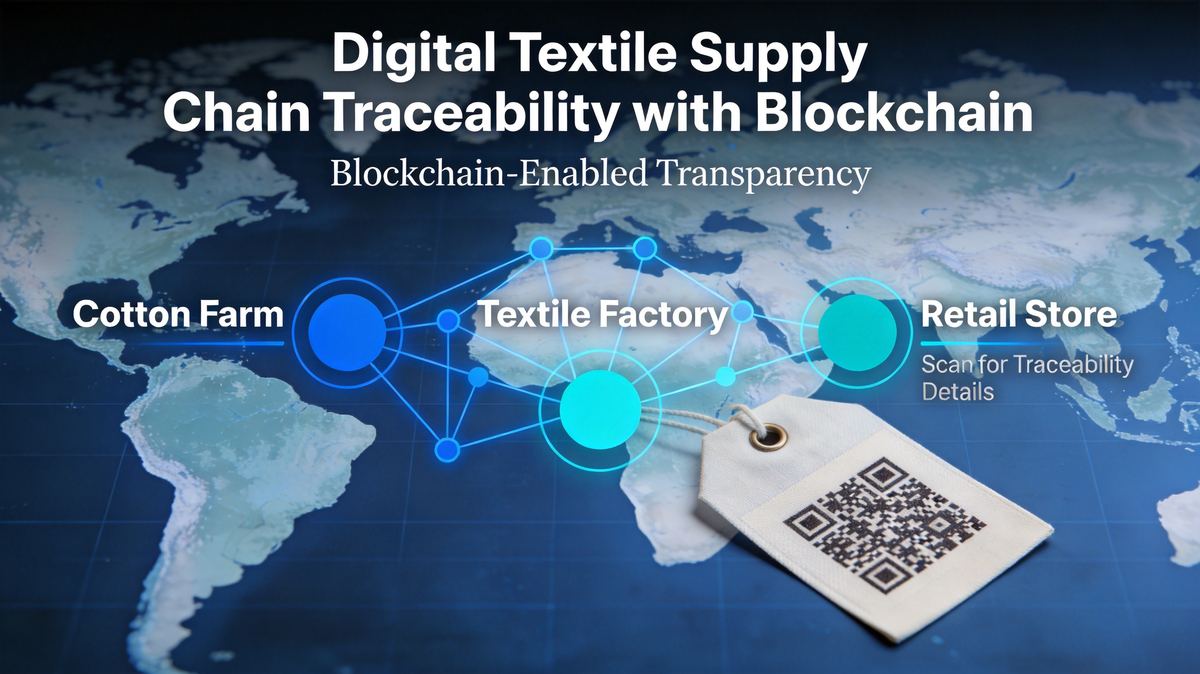
Supply chain transparency has evolved from a marketing differentiator to a regulatory requirement. In 2026, the convergence of blockchain technology, EU Digital Product Passport (DPP) regulations, and consumer demand for ethical fashion is fundamentally reshaping how textile supply chains operate. This article examines the technologies, regulations, and strategies defining textile traceability in 2026.
The Regulatory Landscape
EU Digital Product Passport
The EU Digital Product Passport (DPP), becoming mandatory for textiles in late 2026, represents the most significant regulatory change in textile supply chain transparency. Key requirements include:
Impact on Global Supply Chains
The DPP affects not only EU-based brands but any manufacturer exporting to the EU market. In March 2026, China's Keqiao textile dyeing cluster—representing one of the world's largest concentrations of dyeing and finishing capacity—launched a comprehensive "Textile Green Chain" digital upgrade. Over 200 enterprises completed digital passport data node integration, establishing the infrastructure for DPP compliance.
Other Regional Regulations
Blockchain Technology in Textile Traceability
Market Growth
The global textile blockchain traceability market reached $420 million in 2025 and is projected to exceed $1.87 billion by 2030, growing at a CAGR of 34.8%. This explosive growth reflects the textile industry's urgent need for transparent, verifiable supply chain data.
How Blockchain Works in Textile Supply Chains
Blockchain provides an immutable, decentralized ledger that records every transaction in the supply chain:
Key Benefits
Leading Blockchain Platforms for Textiles
Several platforms have emerged specifically for textile supply chain traceability:
Digital Traceability Technologies Beyond Blockchain
IoT-Enabled Tracking
Internet of Things sensors provide real-time physical data that complements blockchain's transactional records:
AI-Powered Supply Chain Mapping
Artificial intelligence is being used to automatically map complex supply chains:
Isotope and DNA Tracing
For ultimate verification of material origin:
Implementation Strategies for Brands
Step 1: Assess Current Supply Chain Visibility
Before implementing traceability technology, brands must understand their current state:
Step 2: Choose the Right Technology Platform
Selection criteria should include:
Step 3: Phase Implementation
Step 4: Supplier Engagement
Successful traceability requires supplier cooperation:
Challenges and Limitations
Data Quality
Blockchain ensures data integrity but not data accuracy. If incorrect information is entered at the source, the blockchain preserves that inaccuracy. Solutions include:
Cost Distribution
The cost of traceability systems is often borne by suppliers while benefits accrue to brands. Fair cost-sharing models are essential for sustainable implementation.
Privacy Concerns
Suppliers may resist sharing detailed cost and process data. Well-designed systems separate commercial information from traceability data.
The Business Case for Traceability
Beyond regulatory compliance, traceability delivers measurable business value:
Conclusion
Textile supply chain traceability in 2026 is no longer optional—it is a regulatory requirement, a consumer expectation, and a competitive necessity. The combination of blockchain technology, digital passports, and IoT monitoring provides the tools for unprecedented transparency. Brands that embrace these technologies proactively will not only comply with regulations but also build consumer trust, reduce supply chain risk, and create differentiation in an increasingly transparency-conscious market. HONGTEX is committed to supply chain transparency and works with partners to implement traceability solutions that meet the evolving demands of global textile trade.
Comments (0)
Be the first to leave a comment!