
Organic Cotton Certification and GOTS: A Professional Guide to Sustainable Cotton Supply Chains
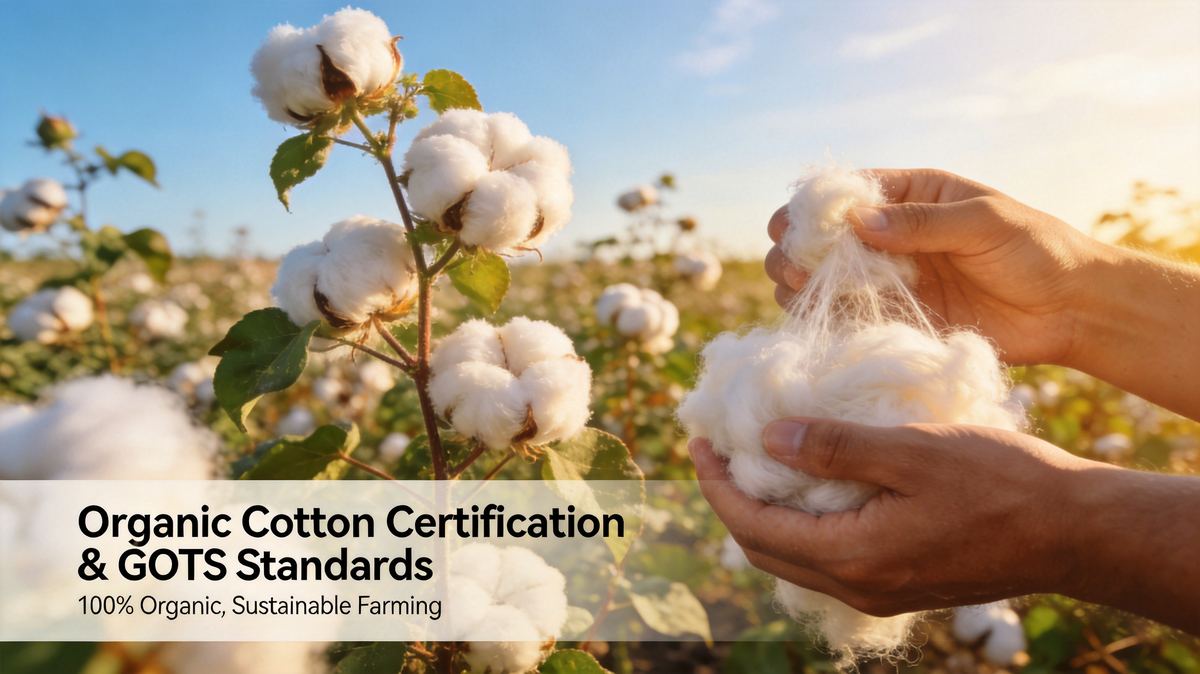
Organic cotton has emerged as one of the most important sustainable materials in the textile industry, with global demand growing at 15% annually. However, genuine organic cotton requires rigorous certification and supply chain transparency. This guide provides a professional overview of organic cotton certification, with particular focus on the Global Organic Textile Standard (GOTS), the world's leading textile processing standard for organic fibers.
Understanding Organic Cotton
What Makes Cotton Organic?
Organic cotton is grown without synthetic pesticides, herbicides, or genetically modified organisms (GMOs). The cultivation process emphasizes:
Environmental Impact Comparison
| Metric | Conventional Cotton | Organic Cotton |
|--------|-------------------|----------------|
| Water usage | 10,000 L/kg fiber | 900 L/kg fiber |
| Pesticide use | 16% of global insecticides | None |
| Energy use | Baseline | 62% less |
| CO2 emissions | Baseline | 46% less |
| Soil health | Depleting | Regenerating |
GOTS: The Gold Standard
The Global Organic Textile Standard (GOTS) is the worldwide leading textile processing standard for organic fibers, including environmental, human rights, and social criteria, backed up by independent certification of the entire textile supply chain.
GOTS Key Features
GOTS certification covers every stage from field to finished product:
GOTS Certification Levels
Prohibited Substances under GOTS
GOTS maintains a comprehensive list of prohibited substances including:
The Certification Process
Step 1: Farm-Level Certification
Cotton farms must be certified organic by an accredited certification body. Key requirements include:
Step 2: Supply Chain Certification
Every entity in the supply chain—from ginners to spinners, knitters, dyers, and garment manufacturers—must be GOTS certified. This requires:
Step 3: Transaction Certificates
For each shipment of GOTS-certified material, a Transaction Certificate (TC) must be issued. This document:
Supply Chain Transparency and Traceability
The EU Digital Product Passport
In 2026, the EU Digital Product Passport (DPP) regulation is becoming mandatory for textiles. This requires:
China's textile hubs, including the Keqiao dyeing cluster in Zhejiang, have begun implementing digital passport systems, with over 200 enterprises completing data integration by March 2026.
Blockchain Traceability
The global textile blockchain traceability market reached $420 million in 2025 and is projected to exceed $1.87 billion by 2030. Blockchain technology enables:
Common Challenges and Solutions
Challenge 1: Supply Chain Complexity
Organic cotton passes through 6-8 entities before becoming a finished garment. Each handoff represents a potential point of contamination or documentation failure.
**Solution**: Implement digital tracking systems with batch-level granularity, and require GOTS transaction certificates at every transfer point.
Challenge 2: Premium Pricing
Organic cotton typically costs 20-50% more than conventional cotton.
**Solution**: Communicate the value proposition clearly—environmental benefits, social responsibility, and regulatory compliance—and leverage certifications to justify premium positioning.
Challenge 3: Limited Supply
Organic cotton represents less than 2% of global cotton production.
**Solution**: Establish long-term contracts with certified suppliers, diversify sourcing across multiple regions (India, Turkey, Tanzania, USA), and consider in-conversion cotton as a transitional option.
How to Verify Genuine Organic Cotton
For brands sourcing organic cotton knit fabrics, verification steps include:
Conclusion
Organic cotton certification and GOTS compliance represent the highest standards of environmental and social responsibility in textile production. As regulations tighten and consumer awareness grows, investing in certified organic cotton supply chains is not just an ethical choice—it is a strategic business decision. HONGTEX supports brands in navigating the complexities of organic cotton sourcing, offering GOTS-compatible knit fabric solutions with full supply chain transparency.
Comments (0)
Be the first to leave a comment!