
Eco-Friendly Textile Dyeing and Color Fastness Innovations: Reducing Water, Enhancing Quality
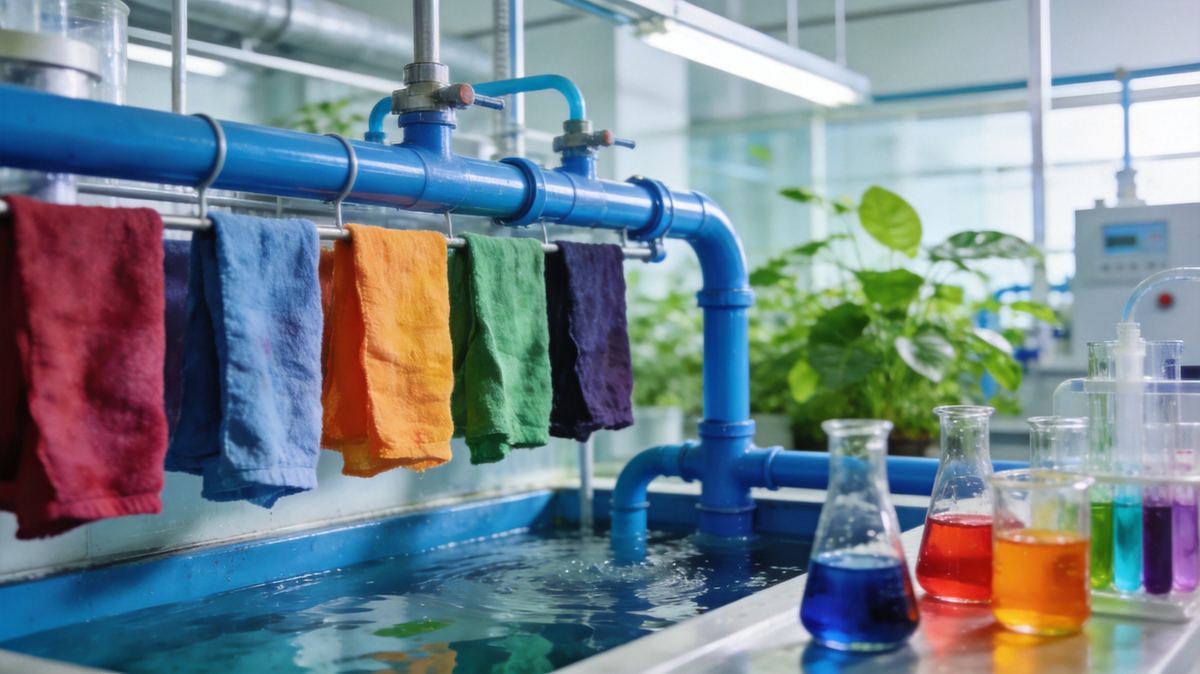
Textile dyeing has long been one of the most resource-intensive and environmentally challenging processes in the apparel supply chain. In 2026, however, breakthrough technologies are fundamentally reimagining how color is applied to fabrics. From bacterial pigments that eliminate chemical dyes entirely to precision digital systems that reduce water consumption by up to 92%, the dyeing industry is undergoing a sustainable revolution.
The Environmental Challenge of Conventional Dyeing
Traditional textile dyeing consumes approximately 1.5 trillion liters of water annually worldwide and generates 20% of global industrial wastewater. The conventional process involves:
These factors combine to make dyeing one of the most environmentally impactful stages of textile production, driving urgent innovation across the industry.
Waterless and Low-Water Dyeing Technologies
Digital Precision Dyeing
In May 2026, Alchemie Technology demonstrated water savings of up to 92% using their jet precision dyeing system, validated by third-party assessment. This technology uses digital control to apply dye exactly where needed, eliminating excess dye liquor and reducing rinse cycles.
Key benefits include:
Supercritical CO2 Dyeing
Supercritical carbon dioxide dyeing eliminates water entirely by using CO2 in a supercritical state as the dye solvent. While the technology has existed for years, 2026 has seen significant scale-up:
Bio-Based Color: Bacterial Dyeing Revolution
Perhaps the most exciting development in 2026 is the emergence of bacterial dyeing. In November 2025, Korean researchers published a groundbreaking study in Biotechnology Trends demonstrating that bacteria can both produce fabric and dye it simultaneously, achieving a full spectrum of colors from purple to yellow without chemical dyes.
How Bacterial Dyeing Works
Commercial Prospects
While bacterial dyeing is still in the pilot phase, several brands have begun trial collaborations with biotechnology firms. Industry analysts project commercial availability by 2027-2028, with initial applications in premium and eco-conscious product lines.
Color Fastness Innovations
Color fastness—the ability of dyed fabric to retain its color under various conditions—remains a critical quality metric. In 2026, new technologies are improving fastness across multiple dimensions.
Enhanced Wash Fastness
Light Fastness Improvements
UV absorbers integrated into dye formulations protect color molecules from photodegradation:
Rub Fastness Enhancement
New surface treatment technologies create a protective layer over dyed fibers:
Testing Standards and Certification
Professional color fastness testing follows internationally recognized standards:
| Property | Test Standard | Method |
|----------|--------------|--------|
| Wash fastness | ISO 105-C06 | Wash at specified temperature, assess color change and staining |
| Light fastness | ISO 105-B02 | Xenon arc exposure, compare to blue wool references |
| Rub fastness | ISO 105-X12 | Crockmeter with dry and wet cotton fabric |
| Perspiration | ISO 105-E04 | Artificial perspiration solution, assess staining |
| Chlorine pool | ISO 105-E03 | Sodium hypochlorite solution, assess color change |
What These Innovations Mean for Brands
For apparel brands and retailers, the dyeing innovations of 2026 offer compelling benefits:
Conclusion
The textile dyeing industry in 2026 stands at a turning point. Technologies that seemed experimental just a few years ago—waterless dyeing, bacterial pigments, precision digital application—are now commercial realities. For brands committed to both quality and sustainability, partnering with manufacturers who invest in these advanced dyeing technologies is essential. HONGTEX employs modern dyeing processes with rigorous color fastness testing to ensure our knit fabrics meet the highest international standards.
Comments (0)
Be the first to leave a comment!